The North Channel is thirteen miles wide at its narrowest point. For as long as anyone has kept records, small boats have crossed it. Cattle went one way, wool the other; marriages, feuds, mercenaries, ministers. Whatever else is disputed about the deeper history of that crossing, the traffic itself is not in question. By the time James Hamilton and Hugh Montgomery struck their deal with Con O’Neill in 1605, freeing him from Dublin Castle in exchange for the greater part of his lands in County Down, the sea between Scotland and Ulster had already been a road for longer than anyone could say. Montgomery took the Ards Peninsula, Hamilton took the country around Bangor and Holywood, and within a decade both men had brought thousands of Ayrshire tenants across to farm it. Four years later the Crown organised the wider scheme. Sir Arthur Chichester, Lord Deputy of Ireland, drove the official plantation of six counties from 1609, and men like Sir Thomas Phillips, who founded Limavady in 1610, and the Scottish undertaker families, the Cunninghams in Donegal, the Achesons in Armagh, the Humes in Fermanagh, the Stewarts in Tyrone, carried it out estate by estate.
What came after is better documented, and it needs no exaggeration. Through the seventeenth century, tens of thousands of Lowland Scots crossed to Ulster from Ayrshire, Galloway, Lanarkshire and the Borders. Most were tenant farmers and tradesmen rather than lords, carrying little beyond a trade and a form of church government that would prove, in the long run, one of the most consequential things they brought with them. They organised their congregations under a Presbyterian order in which a minister answered to a session of elders, not a bishop, and in which the ordinary man had a voice in how his own church was run. Francis Makemie of Ramelton, County Donegal, who studied divinity at Glasgow before emigrating, is remembered in America as the father of organised Presbyterianism there, founding the first presbytery on the continent in 1706. That habit of accountable, bottom-up governance travelled with the settlers wherever they went next, and it shows up, later, in unlikely places: in the town meetings of colonial Pennsylvania, in the Mecklenburg Resolves passed by a Charlotte, North Carolina committee dominated by Scots-Irish Presbyterians on 31 May 1775, a genuinely authenticated set of resolutions severing local ties to royal authority months before the wider colonies moved to independence, and in the flat, unimpressed way Andrew Jackson treated the office of the presidency itself.
They went again, and in far greater numbers, through the 1700s. Several hundred thousand left through Belfast, Derry, Larne, Newry and Portrush over the century, bound mostly for Philadelphia and the Delaware ports, and from there down the Great Wagon Road into the Appalachian backcountry: the Shenandoah, the Carolinas, the Cumberland Gap. It was hard ground and thin welcome, coastal land already being spoken for by others. They took the frontier because the frontier was what was left, and they made a great deal out of it. James Adair, believed to be a County Antrim man, spent decades trading among the Cherokee and Chickasaw and wrote The History of the American Indians in 1775, one of the earliest serious accounts of its kind. Arthur Dobbs of County Antrim purchased four hundred thousand acres in North Carolina, filled ships with Ulster settlers to work it, and served as the colony’s governor from 1753 to 1765. Robert Rogers, born in Methuen, Massachusetts in 1731 to James and Mary Rogers, Ulster-Scots Presbyterians who had emigrated a few years before, raised Rogers’ Rangers during the French and Indian War. His Rules of Ranging, written in 1757, are still issued to graduates of Army Ranger School today, and the unit is honoured by the modern US Army Rangers as one of their earliest and most direct forerunners, alongside Benjamin Church’s earlier militia companies.
The Revolution itself owed the Ulster-Scots a debt rarely mentioned in the textbooks. At the Battle of Kings Mountain on 7 October 1780, a patriot militia force known as the Overmountain Men, drawn heavily from Scots-Irish frontier settlements in Virginia, the Carolinas and what would become Tennessee, destroyed a Loyalist force under Major Patrick Ferguson in a single engagement. Thomas Jefferson later called it “the turn of the tide of success,” and the defeat broke British hopes of holding the southern colonies through Loyalist support, forcing Cornwallis to abandon Charlotte within days. Oliver Pollock, born near Bready, County Tyrone, and settled as a merchant in New Orleans, spent the modern equivalent of a billion dollars of his own fortune financing the Revolutionary cause along the Mississippi, and is credited, fittingly for a man who gave so much of it away, with inventing the dollar sign itself.
The presidency alone tells much of the rest of the story. Andrew Jackson’s parents left Boneybefore, near Carrickfergus, two years before his birth in the Waxhaws; he became the seventh president and the first to be elected from west of the Appalachians. James Buchanan’s father left Ramelton, County Donegal, for Pennsylvania in 1783; Buchanan called his Ulster blood “a priceless heritage.” Andrew Johnson’s grandfather left Larne in 1750 and settled in South Carolina. James Knox Polk descended from Ulster Pollocks who had crossed a generation earlier. Woodrow Wilson’s grandfather left Strabane, County Tyrone, in 1807, and Wilson spoke of that inheritance often once he reached the White House. By most careful counts, somewhere between sixteen and twenty of the United States’ presidents trace direct Ulster or Scots-Irish descent, among them Grant, Arthur, Cleveland, McKinley, Theodore Roosevelt through his mother’s line, Truman, Nixon, Carter, both Bushes and Clinton, with Barack Obama’s mother’s family also tracing a line back to the province.
The frontier and the battlefield carried the same names for two centuries after that. Davy Crockett’s people came out of Castlederg, County Tyrone, before he died at the Alamo alongside Jim Bowie, whose own family carried the same Scots-Irish inheritance south from the Carolinas. Sam Houston, of the same stock, led the Texan army to victory at San Jacinto. Daniel Boone’s family had settled among the same Pennsylvania Scots-Irish communities before he pushed on into Kentucky. Kit Carson scouted the American West under an Ulster surname still common in County Antrim today. In the Civil War the lineage ran through both armies at once: Thomas “Stonewall” Jackson, J.E.B. Stuart and Leonidas Polk in Confederate grey, Ulysses S. Grant and Ambrose Burnside in Union blue. Men who might have shared a great-grandfather’s parish in Antrim or Down stood across the same battlefields from each other, loading the same rifles, singing variations of the same psalms on a Sunday, and killing one another through four years of a war that had nothing to do with the glen or the townland either side had come from. It is one of the quieter costs of a diaspora this large and this old: the same inheritance does not choose a single side, because it was never asked to.
This history does not sit apart from cost, and the record is honest enough to say so. The 1609 settlement scheme confiscated land systematically from the Uí Néill and Uí Domhnaill lords and their followers after the Flight of the Earls in 1607, and even the Hamilton and Montgomery deal that opened this account rested on Con O’Neill’s imprisonment, not his free choice. Ulster paid for the plantation in the following century with the 1641 rebellion and its reprisals, and the same land question, framed by one side as return and by the other as dispossession, remains unresolved in Northern Ireland today. The frontier told a parallel story on the far side of the ocean. James Adair’s decades of trade with the Cherokee and Chickasaw sat inside a wider process of settlement that steadily displaced those same nations from their land, and Andrew Jackson, the son of Ulster emigrants and the seventh president already named above, was the principal architect of the Indian Removal Act of 1830, which drove the Cherokee, Creek, Choctaw, Chickasaw and Seminole nations from their homelands and killed thousands of them on the Trail of Tears. A history built on migration and settlement does not get to celebrate one displacement and stay silent about the other.
Commerce kept pace with politics and war. Cyrus McCormick’s family, whose roots trace to Ballygawley, County Tyrone, built the reaping machine that let a farmer harvest twelve acres a day instead of half an acre, a change the politician William Seward said moved the line of American civilization thirty miles west every year. Andrew Mellon turned the same inheritance into one of Pittsburgh’s great banking fortunes. Francis Torrance, born near Letterkenny, County Donegal, founded a Pittsburgh manufacturing company in 1875 that became, under his son, the largest producer of sanitation goods in the world. At home in Ulster the same practical, unshowy competence kept turning up. John Boyd Dunlop, an Ayrshire vet working in Belfast, patented the pneumatic tyre in 1888. Harry Ferguson, working out of a small garage on Belfast’s May Street, designed the tractor plough that still bears his name on farms worldwide. The Harland & Wolff yards on the Lagan built some of the largest ships of their age, and Ulster linen clothed a good part of the nineteenth-century world.
The migration did not stop at the American coast. Ulster-Scots settlers spread through the rest of the British Empire in numbers large enough to leave a mark on the map itself: between 1841 and 1846, the whole of New Zealand’s North Island north of the Patea River was officially named New Ulster. Two of New Zealand’s most consequential early prime ministers were Ulster-born. John Ballance, from Glenavy, County Antrim, founded the Liberal Party and served as Prime Minister from 1891 to 1893. William Ferguson Massey, from a Presbyterian tenant-farming family near Limavady, founded the Reform Party and led New Zealand through the whole of the First World War as Prime Minister from 1912 to 1925, representing the country afterward at the Versailles peace settlement. Dave Gallaher, born in Ramelton, County Donegal, captained the original All Blacks rugby team from 1903 to 1906. James Dilworth, from Donaghmore, built a banking fortune and left his estate to found what is now Dilworth School in Auckland.
In Australia the same pattern held on a still larger scale. Samuel McCaughey, born near Ballymena, County Antrim, emigrated in 1856 and by 1880 had acquired holdings across New South Wales and Queensland totalling close to three million acres, earning him the nickname “the Sheep King.” He gave much of his fortune away to charity before he died in 1919. Andrew Scott, from Rathfriland, County Down, took a stranger road through Italy, New Zealand and America before becoming one of Australia’s most notorious bushranger outlaws under the name Captain Moonlight. In Canada, Ulster-Scots settlement concentrated so heavily in Toronto that the city earned the nickname “the Belfast of Canada,” complete with Twelfth of July parades larger than anywhere else in the world, and two of its early mayors, Edward Frederick Clarke and Warring Kennedy, rose through the city’s Orange Lodges before taking office.
The writing and the music carried the inheritance further still. Mark Twain, Edgar Allan Poe, John Steinbeck and, later, Stephen King all trace Scots-Irish descent, a thread running from the Mississippi to Maine. James McHenry of Larne, who emigrated in 1817 and settled in Philadelphia, is considered the first Irish American novelist, and returned to Ulster late in life as United States Consul in Derry before dying in his hometown. Horace Greeley, founder of the New York Tribune, descended from the Woodburns of Ulster and wrote proudly of the “store of Scottish and Scotch-Irish traditions” his family carried. Stephen Foster, America’s pre-eminent nineteenth-century songwriter, carried the same inheritance into the popular songbook of the country. John Wallace Crawford, born in Donegal, became an adventurer, performer and storyteller whose romantic tales of the Wild West helped shape America’s popular imagination of the frontier. James Stewart brought the same plain-spoken Ulster manner to the screen a century later, and Elvis Presley carried it, through his mother’s line, into rock and roll. Dolly Parton has spoken often of the Scots-Irish inheritance running through the Appalachian communities that raised her family’s music, and Rosa Parks spoke with quiet pride of a Scots-Irish great-grandmother of her own. The fiddle music that crossed with the eighteenth-century emigrants took root in the Appalachian hollows and became one of the deep sources of American old-time and bluegrass, a debt the genre has never fully repaid in credit.
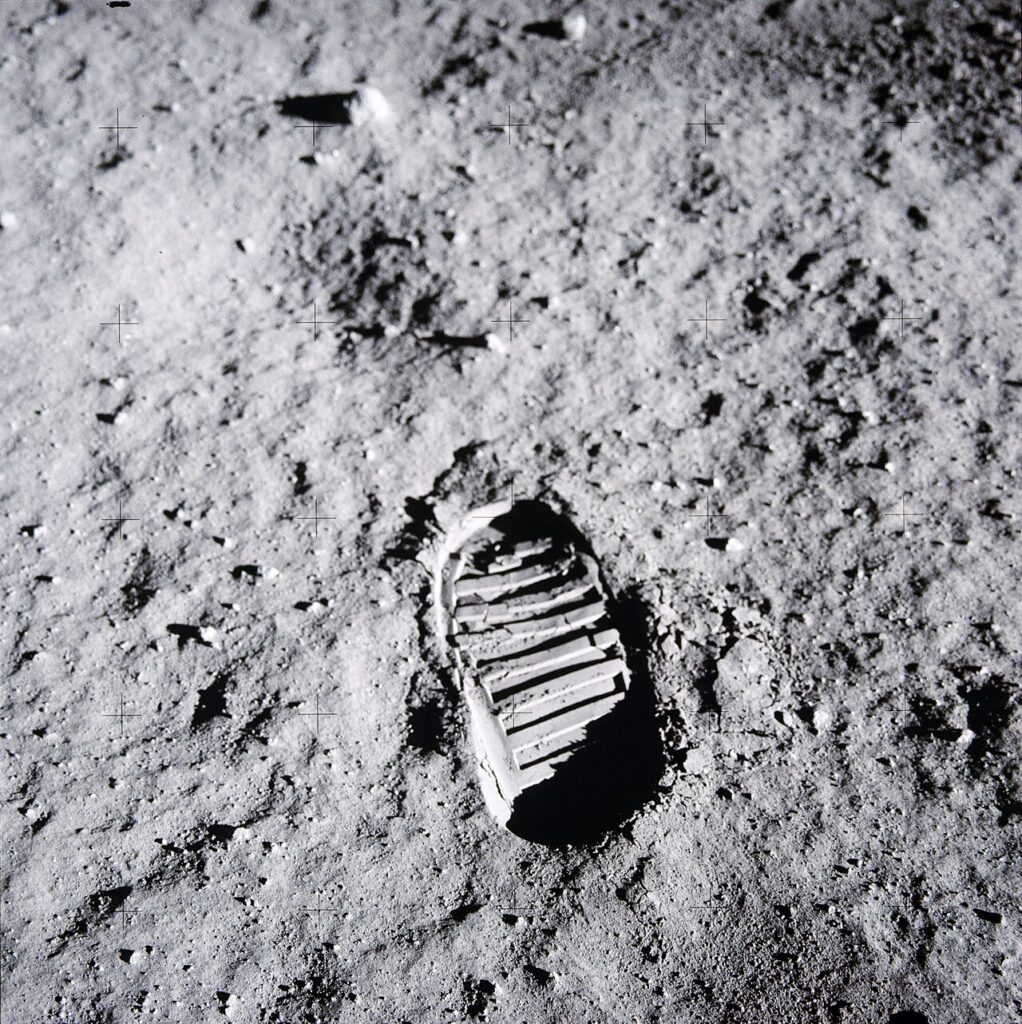
In Ulster itself the same century produced its own literature, less known abroad but no less considered. Cecil Frances Alexander spent most of her life in the Diocese of Derry and Raphoe writing hymns still sung today, among them “All Things Bright and Beautiful,” “There Is a Green Hill Far Away” and “Once in Royal David’s City.” A school of eighteenth and nineteenth century weaver poets wrote in the Ulster-Scots tongue itself while working at the loom: James Orr, the Bard of Ballycarry; Samuel Thomson, the Bard of Carngranny; Hugh Porter, the Bard of Moneyslane; David Herbison, the Bard of Dunclug; and Sarah Leech of Raphoe, County Donegal, whose poem “On the Killing of a Mouse in Harvest” stands comparison with Burns’s own. William Thomson, Lord Kelvin, born in Belfast in 1824, is regarded by many historians of science as the most important physicist of the Victorian age, giving his name to the absolute scale of temperature still used across the world. Two centuries after the great migration began, Neil Armstrong, whose paternal line runs back through Scots-Irish settlers to County Fermanagh and to Langholm on the Scottish Border before that, carried a Border reiver surname to the surface of the Moon. Edward White, of the same Scots-Irish stock, had already become the first American to walk in space four years before.
The culture held its own shape the whole way through, in Ulster and everywhere its people settled. Ulster-Scots speech carries Scots vocabulary that has survived four centuries virtually intact: words like thole and greet, still in daily use in parts of Antrim and Down. The plain, undecorated way of speaking that visitors to Ulster still comment on today is the same directness that got Jackson called Old Hickory, that shaped Twain’s ear for the vernacular two centuries later, and that runs, mile after mile, through the whole record set out above: a people who did not explain themselves and did not need to, because the work was the explanation.
It is not, on the evidence, a minor story, and it is not a clean one either. It is the story of a people who crossed a narrow sea, then a wide one, and kept building wherever they landed, often at a cost paid by others rather than themselves: kirks on wet ground in Antrim and Down, ships on the Lagan, farms cut out of Appalachian hillside that had belonged to someone else first, a Revolutionary war chest paid for out of one merchant’s own pocket, sheep stations across three million acres of Australian outback, a prime minister’s office in Wellington held twice over, a mayor’s chain in Toronto, a seat at the American presidential desk more often than any single lineage has a right to expect, and in the end a footprint on another world. The accent held. The stubbornness held too. So did the cost, for the people who were already standing on the ground before any of it began.
A note on tone: this piece is written as celebration and tribute, drawing only on the well-documented achievements and migration history of the Ulster-Scots/Scots-Irish. It deliberately avoids the contested “ancient indigenous return” thesis discussed elsewhere in this research.
Sources
Plantation founding and mechanics: Robinson, P. (1984) The Plantation of Ulster: British Settlement in an Irish Landscape, 1600-1670. Belfast: Ulster Historical Foundation; Ulster Historical Foundation, “The Plantation of Ulster”; Discover Ulster-Scots, “How did the Plantation affect ordinary people?”; Wikipedia, “Chichester Phillips.”
Presbyterian governance and Francis Makemie: Marshall, R. (1908) The Life of Francis Makemie. Philadelphia: Presbyterian Board of Publication; Discover Ulster-Scots, “Patriots, Pioneers and Presidents”; Britannica, “Francis Makemie”; Encyclopedia.com, “Francis Makemie”; Christianity Today, “American Presbyterianism Was Born Amid Chaos”; Wikipedia, “Francis Makemie” (citing the Dictionary of National Biography).
Mecklenburg Resolves (corrected from an earlier draft reference to the “Mecklenburg Declaration”): Hoyt, W.H. (1907) The Mecklenburg Declaration of Independence: A Study of Evidence…, the foundational academic study establishing that the widely circulated “Mecklenburg Declaration” of 20 May 1775 is a later, unreliable 1819 reconstruction, distinct from the genuinely authenticated Mecklenburg Resolves of 31 May 1775; corroborated by NCpedia, Wikipedia and the American Battlefield Trust.
Migration routes, Adair, Dobbs: Discover Ulster-Scots, “Patriots, Pioneers and Presidents.”
Robert Rogers and Rogers’ Rangers: American Heritage, “Americans As Guerrilla Fighters: Robert Rogers And His Rangers”; Wikipedia, “Robert Rogers (British Army officer)”; US Army official heritage page, noting Rogers’ Rangers alongside Benjamin Church’s earlier companies as joint forerunners, rather than a single unbroken lineage.
Battle of Kings Mountain and Jefferson quote: Draper, L.C. (1881) King’s Mountain and Its Heroes; American Battlefield Trust; Britannica; South Carolina Historical Society; North Carolina History.
Oliver Pollock and the dollar sign: Discover Ulster-Scots, “Patriots, Pioneers and Presidents”; the claim itself is genuinely contested among historians (see werehistory.org, “The Curious Origins of the Dollar Sign”), which is why the piece hedges with “is credited with” rather than stating it as settled fact.
US Presidents of Ulster/Scots-Irish descent: Webb, J. (2004) Born Fighting: How the Scots-Irish Shaped America. New York: Broadway Books; Wikipedia, “List of Scotch-Irish Americans”; Newsletter.co.uk; Discover Ulster-Scots, “Leaders of the Nations”; Ireland on a Budget; Discover Ulster-Scots, “Woodrow Wilson: Virginian President of Ulster Stock.”
Frontier and military figures (Crockett, Houston, Boone, Carson, Civil War generals): Webb, J. (2004) Born Fighting; Ulster-Scots Agency, “Famous Ulster-Scots”; Discover Ulster-Scots, “Famous Ulster-Scots”; Scottish Shields; Stephenson Family; American Heritage, “The Scotch-Irish”; New World Celts. On the contested “Stonewall” Jackson ancestry specifically, the genealogy itself is disputed and flagged as such in-piece.
Commerce and industry (McCormick, Mellon, Torrance, Dunlop, Ferguson): Hutchinson, W.T. (1948) Cyrus Hall McCormick: Seed-Time, 1809-1856; Discover Ulster-Scots, “Patriots, Pioneers and Presidents”; Ulster-Scots Agency, “Famous Ulster-Scots” and “Facts.”
New Zealand: Ulster-Scots Agency, “Famous Ulster-Scots”; Discover Ulster-Scots, “New Zealand”; Newsletter.co.uk; verified against Te Ara / Dictionary of New Zealand Biography, “Massey, William Ferguson” and “Ballance, John”; Dictionary of Irish Biography. Ballance’s birthplace, party founding and premiership dates (1891–93) confirmed directly against Britannica, Te Ara and Wikipedia. Gallaher’s birthplace (Ramelton, County Donegal) and All Blacks captaincy dates (1903–06) confirmed directly against NZ History, Wikipedia and multiple Donegal genealogical sources.
Australia: Discover Ulster-Scots, “Australia” (McCaughey, Andrew Scott / “Captain Moonlight”); verified against Australian Dictionary of Biography, “McCaughey, Sir Samuel”; Dictionary of Irish Biography (both give McCaughey’s peak holdings as approximately three million acres, not confirmed as the single largest in Australia, which is why the piece was adjusted to remove that superlative). Andrew Scott’s birthplace (Rathfriland, County Down) confirmed directly against the Australian Dictionary of Biography and Wikipedia.
Canada: Celtic Life International, “The Ulster-Scots of Canada” (Toronto as “the Belfast of Canada,” Mayors Clarke and Kennedy).
Literature and music (Twain, Poe, Steinbeck, King, McHenry, Greeley, Foster, Crawford, Stewart, Presley, Parton, Rosa Parks, Armstrong, White): Discover Ulster-Scots, “Patriots, Pioneers and Presidents”; Stephenson Family, “Twenty Things You Didn’t Know About Ulster-Scots”; Scottish Shields; The Scotsman, “The roots of a nation: The Scots Irish that built America”; Celtic Ancestry Gifts; IAmNorthernIreland, “The Scots Irish.”
Ulster home-front literature (Alexander, weaver poets): Discover Ulster-Scots, “Famous Ulster-Scots” (language and literature); Ulster-Scots Agency, “Facts” and “Famous Ulster-Scots” booklet.