TBA-003 · Public Evidence Audit
Anne Boleyn
Tower of London · May 1536
This case is usually retold as a doomed love-triangle scandal: a queen’s infidelities finally catch up with her. The indictment itself is a checkable document, naming specific dates and places for each act of adultery. Checked against court itinerary and childbirth records, a significant proportion of those dates cannot be true as stated, a fact the prosecution itself appears to have anticipated.
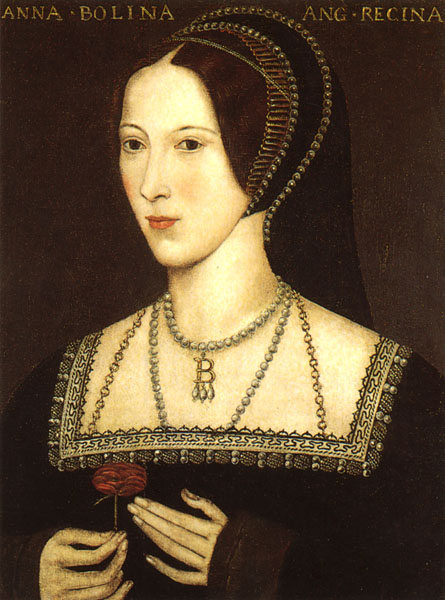
Portrait of Anne Boleyn, English School, mid-16th century, Hever Castle.
Claim tested
What does the surviving indictment establish about the charges against Anne Boleyn, and how far can its specific dates and locations be trusted?
Concise verdict
The trial, verdict and execution are matters of record. The specific dated instances of adultery in the Middlesex and Kent indictments are not: at least two of the earliest and most-cited instances are directly contradicted by court itinerary and by Anne’s own documented confinement after childbirth. Historian Eric Ives has argued that roughly three-quarters of the indictment’s dated instances cannot be sustained as stated. Only one of the five men charged with her ever confessed, and that confession is widely understood to have been obtained under duress. What drove the prosecution, and how far it was engineered rather than investigated, remains a genuinely disputed question among historians.
Why this claim matters
Retellings that treat the adultery charges as broadly credible, even while noting the trial was “unfair,” understate how far the specific document goes wrong on checkable facts. The indictment alleges Anne procured Sir Henry Norris at Westminster on 6 October 1533, a date on which surviving court records place her at Greenwich, still confined following Princess Elizabeth’s birth the previous month. It alleges a further offence with Sir William Brereton at Hampton Court on 8 December 1533, a date on which the royal household is recorded as being at Greenwich. The Crown protected the indictment against exactly this kind of challenge with a catch-all clause covering “divers other days,” which kept it legally valid regardless. The specific dates were, in that sense, never meant to survive scrutiny, which is a more precise and more damning finding than “the trial was unfair.”
Chronology
SEPTEMBER 1533
Anne, crowned queen in June, gives birth to Princess Elizabeth at Greenwich. Convention of the period required a period of confinement and “churching” (a ceremony of purification) before she would have resumed public and marital life.
APRIL 1536
A commission of inquiry into the queen’s conduct is established. On 30 April, court musician Mark Smeaton is questioned, reportedly under duress at Thomas Cromwell’s house in Stepney, and becomes the only one of the accused to confess to adultery with the queen.
1-5 MAY 1536
Following the May Day joust, Sir Henry Norris is questioned by the King directly; according to his own later account, he was offered pardon in exchange for confession and refused. Anne is arrested on 2 May and taken to the Tower. Sir Francis Weston, Sir William Brereton and Anne’s brother, George Boleyn, Lord Rochford, are arrested over the following days.
10-11 MAY 1536
The Grand Jury of Middlesex, at Westminster, and the Grand Jury of Kent, at Deptford, each return a true bill, formally setting out the specific dated instances of adultery, incest and treason on which the case proceeds to trial.
12 MAY 1536
Smeaton, Norris, Weston and Brereton are tried and convicted at Westminster. Smeaton alone had confessed; the other three denied the charges throughout.
15 MAY 1536
Anne and George Boleyn are tried separately at the Tower of London before a court of 27 peers, presided over by Anne’s own uncle, Thomas Howard, Duke of Norfolk, as Lord High Steward. Both are convicted unanimously.
17 MAY 1536
Norris, Weston, Brereton, Smeaton and George Boleyn are beheaded by axe at Tower Hill. Earlier the same day, Archbishop Cranmer pronounces Anne’s marriage to Henry null and void, a ruling that, taken at face value, removes the legal basis for an adultery charge, since she was thereby held never to have validly been his wife.
19 MAY 1536
Anne is executed at Tower Green by a swordsman brought specially from Calais or St Omer, arranged, on the ambassadorial record, before the trial’s outcome was known.
Source hierarchy
The Middlesex and Kent indictments (Baga de Secretis, Court of King’s Bench, held at The National Archives, KB 8/9) are the primary legal record of the charges as formally laid. Cromwell’s own letter of 14 May 1536 to English envoys in France, describing the case, is primary correspondence from the prosecution’s chief architect. Modern academic treatments (Ives, Bernard, Walker, see Source Schedule) are secondary and are in genuine, ongoing disagreement about mechanism and motive; this audit reports that disagreement rather than resolving it.
Provenance assessment
The indictment’s specific dates and locations are internally checkable against independently attested facts, the date of Elizabeth’s birth and the customary confinement period, and the royal household’s recorded itinerary, rather than against contested testimony. That is what makes the contradictions here unusually solid: they do not depend on preferring one witness’s account over another’s, only on comparing the charge sheet to where people demonstrably were.
Contradiction table
A dossier does not smooth over conflicts in the record. Where sources disagree, the disagreement is stated, not resolved by preference for the more commonly repeated version.
| Point of fact | Version A | Version B | Status |
|---|---|---|---|
| Norris offence, 6-12 October 1533 | Indictment: at Westminster | Anne was at Greenwich, still in post-childbirth confinement | Contradicted |
| Brereton offence, 8 December 1533 | Indictment: at Hampton Court | Court itinerary records the household at Greenwich that day | Contradicted |
| Name of Anne’s executioner | Popular/fictional tradition: “Jean Rombaud” | Biographical research names him as an English-descended headsman, Bartholomew, based at Calais or St Omer; “Rombaud” traces to 20th-21st-century historical fiction, not a contemporary record | Contradicted |
This audit relies on published transcriptions of the indictments (Baga de Secretis) rather than direct examination of the manuscript at The National Archives; a fully resourced investigation would verify the transcriptions against the original.
Evidential classification
| Claim | Classification |
|---|---|
| Anne Boleyn was tried, convicted and executed in May 1536 on charges of adultery, incest and treason | Supported |
| The Norris (October 1533) and Brereton (December 1533) instances occurred as dated and located in the indictment | Unsupported (contradicted by confinement and court-itinerary records) |
| The prosecution’s evidence as a whole was reliable | Unsupported (only one of five confessed, reportedly under duress; the majority of dated instances are disputed by historians as impossible) |
| The case was politically engineered rather than a genuine investigation | Probable, historiographically disputed (Ives argues fabrication; Bernard and Walker offer differing readings of motive and mechanism) |
| Anne’s executioner was named Jean Rombaud | Unsupported (traced to historical fiction, not a contemporary record) |
What can safely be said
“Anne Boleyn was convicted of adultery, incest and treason and executed in May 1536. At least two of the specific dated instances in the indictment are directly contradicted by court itinerary and childbirth-recovery records, and historian Eric Ives has argued that roughly three-quarters of the indictment’s dated instances cannot be sustained. Only one of the five men charged with her, Mark Smeaton, ever confessed, a confession widely believed to have been obtained under duress. Whether the case was deliberately engineered, and by whom, remains disputed among historians.” This is directly supportable from the indictments, contemporary correspondence and the peer-reviewed historiography.
Unresolved evidence gaps
The Baga de Secretis indictment documents (KB 8/9) held at The National Archives have not been directly examined for this audit; the analysis relies on published transcriptions. The historiographical dispute over motive and mechanism (Ives vs. Bernard vs. Walker) is reported here, not adjudicated; this audit takes no position on which reading is correct.
Source schedule
| Source | Type |
|---|---|
| Middlesex and Kent Indictments, 10-11 May 1536 (Baga de Secretis, KB 8/9, The National Archives) | Primary: legal record, as transcribed |
| Letters and Papers, Foreign and Domestic, Henry VIII, Vol. 10 (1536), item 873, Cromwell to Wallop and Gardiner, 14 May 1536 | Primary: contemporary correspondence |
| Ives, E.W., “The Fall of Anne Boleyn Reconsidered,” English Historical Review 107 (1992) | Secondary: peer-reviewed |
| Bernard, G.W., “The Fall of Anne Boleyn,” English Historical Review 106 (1991) | Secondary: peer-reviewed, competing reading |
| Walker, G., “Rethinking the Fall of Anne Boleyn,” The Historical Journal 45:1 (2002) | Secondary: peer-reviewed, competing reading |
Commission work using this method.
Private dossiers apply the same source hierarchy, provenance assessment, contradiction mapping and evidential classification to your subject, scoped to your specific claim, intended use and deadline.