TBA-004 · Public Evidence Audit
The Bermondsey Murder
Bermondsey, London · August 1849
This case is usually framed as a jealous love-triangle killing: a wife, her lover, and a husband driven to violence. The couple’s own recorded conduct, Frederick’s apparent tolerance of the affair over several years, and the specific financial planning behind the murder, points more precisely to a calculated killing for money than a crime of passion. The confession quote most often attached to Frederick Manning also does not appear in a consistent form across sources.
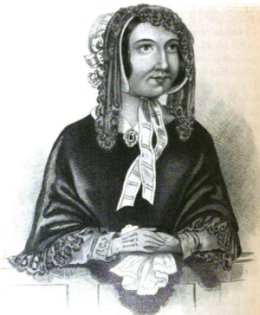
Marie Manning, contemporary print from The Progress of Crime, or, The Authentic Memoirs of Maria Manning by Robert Huish, 1849.
Claim tested
What does the surviving record establish about the motive, the killing itself, and Frederick Manning’s disputed “confession” quote?
Concise verdict
The killing, burial, discovery and conviction are well established. The record supports a financially motivated, premeditated killing, the crowbar and quicklime were bought in advance, and O’Connor was deliberately arranged to attend alone, rather than a spontaneous crime of jealous passion, and Frederick’s presence throughout Marie’s years-long affair with O’Connor was apparently tolerated rather than concealed from him. The graphic “confession” line most often quoted for Frederick does not appear consistently across sources, and the precise contribution of his chisel blow to O’Connor’s death, versus the gunshot itself, is less settled than dramatic retellings suggest.
Why this claim matters
“Love triangle” is the framing that sells the case, but it understates what actually drove it and misattributes Frederick’s role. The couple bought a crowbar and a quantity of quicklime in the weeks before the killing, and specifically asked O’Connor to return alone on the night he died, the hallmarks of a planned, financially motivated murder, not a jealous outburst. Separately, at least one popular account attributes to Frederick a vivid confession, “I never liked him, so I battered his head with a ripping chisel,” that does not match the milder statement other sources record him making at trial. A dossier that repeats the more dramatic quote without checking it risks putting words in a historical subject’s mouth that cannot be sourced to the trial record.
Chronology
27 MAY 1847
Marie de Roux, a Swiss former lady’s maid, marries publican Frederick George Manning at St James’s Church, Piccadilly. She continues her friendship with Patrick O’Connor, a gauger and moneylender at the London Docks whom she had known before her marriage; O’Connor remains a regular dinner guest at the Mannings’ home over the following two years.
SUMMER 1849
Having established that O’Connor holds valuable foreign railway stock, the Mannings arrange for a crowbar and a quantity of quicklime to be delivered to their house at 3 Miniver Place, Bermondsey, in the weeks before the killing.
8 AUGUST 1849
O’Connor is invited to dinner but brings a friend along. The Mannings invite him again for the following night, specifically requesting he come alone.
9 AUGUST 1849
O’Connor dines alone with the Mannings. Marie shoots him in the back of the head; Frederick strikes him further, reportedly with the ripping chisel bought earlier. The body is buried under the kitchen flagstones and covered with quicklime.
10-13 AUGUST 1849
Marie visits O’Connor’s lodgings on Greenwood Street, Mile End Road, on two separate days using his own keys, removing cash, watches and railway share certificates. O’Connor’s colleagues report him missing when he fails to appear for work; friends circulate handbills.
17 AUGUST 1849
Police constables searching 3 Miniver Place notice a damp, recently disturbed flagstone in the kitchen and pry it up with a crowbar, discovering O’Connor’s body. The Mannings have already fled separately.
18-21 AUGUST 1849
Marie is arrested in Edinburgh after Scottish stockbrokers, suspicious of her accent, question her attempt to sell O’Connor’s railway shares, a list of which had been published. Frederick is arrested days later on Jersey, recognised by a man who had read of the murder in the press.
25-26 OCTOBER 1849
Contemporary press reports the trial as taking place at the Central Criminal Court over these two days, before Chief Baron Pollock and Mr Justice Cresswell; the jury convicts both defendants after roughly 45 minutes’ deliberation.
13 NOVEMBER 1849
Frederick and Marie Manning are hanged together on the roof of Horsemonger Lane Gaol by William Calcraft, the first husband-and-wife execution in England since 1700. Novelist Charles Dickens attends and writes to The Times condemning the crowd’s conduct.
Source hierarchy
The Old Bailey Proceedings Online trial record and contemporary press coverage of the trial sit as the primary record of the case as prosecuted. A modern critical edition of the trial transcript (Stratmann, Trial of the Mannings, Notable British Trials series, 2022) is treated as an authoritative secondary compilation. Popular retellings, encyclopaedia entries, true-crime blogs and television treatments, are used here only to identify where they diverge from the primary record, not as evidence in themselves.
Provenance assessment
The physical evidence, the pre-purchased crowbar and quicklime, the deliberate exclusion of O’Connor’s friend from the fatal dinner, the burial and robbery that followed, is corroborated across multiple contemporary witnesses (a former lodger’s testimony on the crowbar and lime delivery; the landlady’s evidence on Marie’s return visits). The specific wording attributed to Frederick as a “confession,” by contrast, varies between sources and is harder to trace to a single, reliable point of origin.
Contradiction table
A dossier does not smooth over conflicts in the record. Where sources disagree, the disagreement is stated, not resolved by preference for the more commonly repeated version.
| Point of fact | Version A | Version B | Status |
|---|---|---|---|
| Frederick’s recorded “confession” | Several popular retellings: “I never liked him, so I battered his head with a ripping chisel” | Other accounts record only the milder trial statement, “I never liked him very much,” with no weapon reference | Contradicted |
| Cause of death, role of the chisel blow | Several retellings: the gunshot was not lethal on its own, so Frederick “finished the job” with a chisel/crowbar | Surgeon testimony reported elsewhere concludes the bullet wound “would have eventually caused death” on its own | Unresolved |
| Trial dates | Contemporary press: trial held 25-26 October 1849 | Old Bailey Proceedings Online catalogue reference: session dated 29 October 1849 | Minor, likely cataloguing convention |
The trial-date discrepancy most likely reflects how the Old Bailey sessions paper is indexed by the opening date of the wider sessions rather than the specific days a given case was heard, rather than a substantive conflict. It is recorded for completeness, not presented as a live dispute.
Evidential classification
| Claim | Classification |
|---|---|
| The Mannings jointly killed O’Connor for financial gain and buried him beneath their kitchen | Supported |
| The killing was premeditated, not a spontaneous jealous act | Supported (advance purchase of crowbar and quicklime; O’Connor deliberately isolated) |
| The case was fundamentally a jealous “love triangle” killing | Unsupported as primary motive (Frederick appears to have tolerated the affair for years; the documented planning centres on O’Connor’s money) |
| Frederick confessed in the specific words “I battered his head with a ripping chisel” | Disputed (inconsistent across sources; not clearly traceable to the trial transcript) |
| The gunshot alone would not have killed O’Connor without the chisel blow | Unresolved (conflicting secondary accounts of surgeon testimony) |
What can safely be said
“Frederick and Marie Manning killed Patrick O’Connor at their Bermondsey home on 9 August 1849 and buried him beneath their kitchen floor, in a premeditated killing motivated by his money rather than jealousy. Frederick appears to have tolerated Marie’s long friendship with O’Connor for years. Both were convicted and hanged together that November, the first husband and wife executed jointly in England since 1700. Popular retellings vary in the specific words they attribute to Frederick as a confession, and in exactly how the gunshot and chisel wound each contributed to O’Connor’s death; neither point can be stated with certainty from the sources checked here.” This is directly supportable from the trial record and corroborating contemporary testimony.
Unresolved evidence gaps
The original Old Bailey Proceedings Online transcript and the surgeons’ full trial testimony on cause of death have not been directly re-examined against the secondary accounts cited here; a fully resourced audit would consult both directly to resolve the chisel/gunshot question and to verify Frederick’s exact recorded words.
Source schedule
| Source | Type |
|---|---|
| Old Bailey Proceedings Online, Trial of Frederick George Manning and Maria Manning (t18491029-1890) | Primary: digitised trial record |
| Contemporary press reports of the trial, October 1849 (e.g. syndicated colonial press coverage of “Trial and Conviction of the Mannings”) | Primary: contemporary reporting |
| Stratmann, L. (ed.), Trial of the Mannings, Notable British Trials series (Mango Books, 2022) | Secondary: critical edition of trial transcript |
| Borowitz, A., The Woman Who Murdered Black Satin: The Bermondsey Horror (Ohio State University Press, 1981) | Secondary: academic case study |
Commission work using this method.
Private dossiers apply the same source hierarchy, provenance assessment, contradiction mapping and evidential classification to your subject, scoped to your specific claim, intended use and deadline.