TBA-005 · Public Evidence Audit
Amelia Dyer
Caversham, Reading · 1896
This case is usually retold with a headline victim count in the hundreds. The 1896 investigation itself recovered and named a much smaller number of victims, and secured a single conviction on a sample charge. Some popular sources also misplace the trial by two months, and a small number attach an unsupported theory linking Dyer to the Jack the Ripper murders.
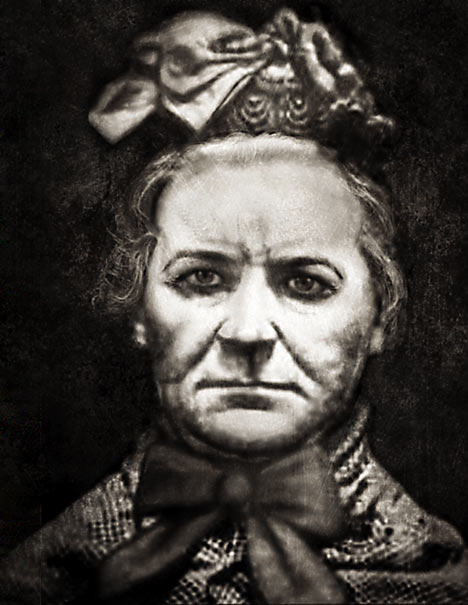
Photograph of Amelia Dyer taken on entry to Wells Asylum, 1893.
Claim tested
What does the surviving record establish about the number of Amelia Dyer’s victims, the timeline of her arrest and trial, and claims connecting her to other unsolved cases?
Concise verdict
Dyer was convicted and hanged for one murder, that of infant Doris Marmon, a sample charge in a case where police believed there were many more victims. The 1896 investigation recovered roughly seven infant bodies from the Thames, several identified by name, and police stated at the time that further evidence pointed to at least twelve murders. The figure of 200 to 400 victims that dominates modern retellings has no documented basis in the 1896 record; it is a retrospective extrapolation from Dyer’s decades of activity, not a count. Some tourist-attraction sources also place the trial in March 1896, which is chronologically impossible given her arrest did not occur until early April. Claims linking Dyer to the Jack the Ripper murders have no supporting evidence in either case’s record.
Why this claim matters
A round number in the hundreds is more shareable than a documented investigation, but it erases the actual mechanics of the case: a decoy newspaper advertisement, an undercover arrest, pawn tickets and letters recovered from Dyer’s lodgings, and a jury that took minutes to convict. The real record also names real victims, Helena Fry, Doris Marmon, Harry Simmonds and Elizabeth Goulding’s daughter among them, where the inflated figure treats them as an undifferentiated mass. A commissioned account intended for broadcast or publication should state what the 1896 investigation actually established, and treat the higher estimates as exactly that: estimates, clearly labelled, not a documented total.
Chronology
1860s ONWARD
Amelia Dyer, trained as a nurse and midwife, becomes involved in “baby farming”, taking payment to care for or arrange adoption of infants, chiefly the illegitimate children of unmarried mothers who had no legal claim on the fathers for support under the Poor Law Amendment Act 1834. She operates for decades under several aliases, including “Mrs Thomas” and “Mrs Harding,” moving between addresses and admitted to mental asylums more than once during this period.
JANUARY 1896
Evelina Marmon, an unmarried woman in Cheltenham, gives birth to a daughter, Doris, and places a newspaper advertisement seeking someone to take the child. Dyer, using the alias “Mrs Harding,” answers the advertisement and takes custody of Doris for a fee.
30 MARCH 1896
A bargeman recovers a brown paper parcel from the Thames at Caversham containing the body of an infant girl, strangled with tape and later identified as Helena Fry. Partial packaging bears the name and address of “Mrs Thomas,” one of Dyer’s aliases.
2 APRIL 1896
Dyer places two further infant bodies in a weighted carpet bag and dumps it in the Thames at Caversham Lock.
EARLY APRIL 1896
Reading police trace the address on the recovered packaging to Dyer, place a decoy newspaper advertisement offering to place a child, and arrest her when she arrives to collect the fee. A search of her lodgings at Mayo Road finds no bodies but an overwhelming smell of decomposition, tape matching that on the recovered infants, pawn tickets for children’s clothing, and letters from anxious mothers.
APRIL TO MAY 1896
Further dredging of the Thames recovers additional infant bodies. By May, roughly seven bodies have been recovered in total; several are identified by name, including Doris Marmon and Harry Simmonds, alongside others that remain unidentified. Police state that further evidence points to at least twelve murders.
21-23 MAY 1896
Dyer stands trial at the Old Bailey on a single sample charge, the murder of Doris Marmon. She pleads guilty but claims insanity; the defence is rejected, and the jury convicts within minutes.
10 JUNE 1896
Dyer is hanged at Newgate Prison by James Billington.
1897 AND 1908
The case contributes to the Infant Life Protection Act 1897 and the Children Act 1908, which required local authorities to be notified within 48 hours of any change of custody or death of a child under seven.
Source hierarchy
The Reading police investigation record, held in the Thames Valley Police Museum archive, together with the Old Bailey trial itself, sit as the primary record of what was proven and what police stated at the time. The 200-to-400 victim figure and the Jack the Ripper theory are not traceable to this primary record; they appear only in later popular treatments, without a cited source.
Provenance assessment
The recovered evidence, tape, pawn tickets, correspondence, and the identified bodies, is corroborated by the museum’s own retained artefacts, some rediscovered and donated as recently as the 2010s. The higher victim estimates rest on no comparable physical or documentary record; they are arithmetic extrapolations from Dyer’s known decades of activity, presented in some sources as if they were an established count.
Contradiction table
A dossier does not smooth over conflicts in the record. Where sources disagree, the disagreement is stated, not resolved by preference for the more commonly repeated version.
| Point of fact | Version A | Version B | Status |
|---|---|---|---|
| Total number of victims | Popular retellings: 200 to 400 victims | Contemporary police assessment: roughly seven bodies recovered, several named, further evidence pointing to at least twelve murders | Contradicted |
| Date of trial | Some tourist-attraction sources: trial held in March 1896 | Multiple independent accounts and the arrest timeline: trial held 21-23 May 1896 | Contradicted |
| Connection to the Jack the Ripper murders | Some informal true-crime commentary: Dyer’s victims include botched-abortion deaths misattributed to the Ripper | No primary source, contemporary record, or peer-reviewed treatment of either case supports a connection | Unsupported |
The March 1896 trial date is straightforwardly impossible given Dyer was not arrested until early April; it most likely reflects an uncorrected error copied between similarly worded tourist-attraction web pages rather than a genuine dispute in serious sources.
Evidential classification
| Claim | Classification |
|---|---|
| Dyer was convicted of murdering Doris Marmon and hanged in June 1896 | Supported |
| Investigators recovered and named several infant victims, with further evidence pointing to at least twelve murders | Supported (per the contemporary police assessment) |
| Dyer killed between 200 and 400 infants over her career | Unsupported (no documented count; an unsourced retrospective extrapolation) |
| Dyer’s trial took place in March 1896 | Unsupported (chronologically impossible given the arrest date) |
| Dyer was connected to the Jack the Ripper murders | Unsupported (no evidentiary basis in either case) |
What can safely be said
“Amelia Dyer was convicted of murdering the infant Doris Marmon and hanged at Newgate Prison on 10 June 1896. The 1896 investigation recovered and named several infant victims from the Thames, and police at the time stated that further evidence pointed to at least twelve murders. The figure of 200 to 400 victims often attached to her case has no documented basis and should be presented as an estimate, not an established count. Claims connecting Dyer to the Jack the Ripper murders have no supporting evidence.” This is directly supportable from the police investigation record and the trial itself.
Unresolved evidence gaps
The full Old Bailey trial transcript and the original Reading police case files have not been directly examined for this audit; the analysis relies on the Thames Valley Police Museum’s own published account and secondary treatments. The specific origin point of the 200-to-400 figure has not been traced to a named first source and would require further research to establish.
Source schedule
| Source | Type |
|---|---|
| Thames Valley Police Museum, “The Baby Farmer” (official case archive, including recovered physical evidence) | Primary: law enforcement archive |
| Old Bailey trial of Amelia Dyer, May 1896 sessions | Primary: trial record (not independently re-examined for this audit; specific session reference not yet verified) |
| Buckley, A., Amelia Dyer and the Baby Farm Murders (Mango Books, 2016) | Secondary: researched narrative account drawing on press, letters and trial detail |
Commission work using this method.
Private dossiers apply the same source hierarchy, provenance assessment, contradiction mapping and evidential classification to your subject, scoped to your specific claim, intended use and deadline.