TBA-006 · Public Evidence Audit
The Phoenix Park Murders
Phoenix Park, Dublin · 6 May 1882
Lord Frederick Cavendish and Thomas Henry Burke were stabbed to death by a breakaway nationalist group hours after Cavendish arrived in Dublin. Five years later, a British newspaper published letters implying Charles Stewart Parnell had condoned the killings. This audit tests that claim against the Special Commission that examined it directly.
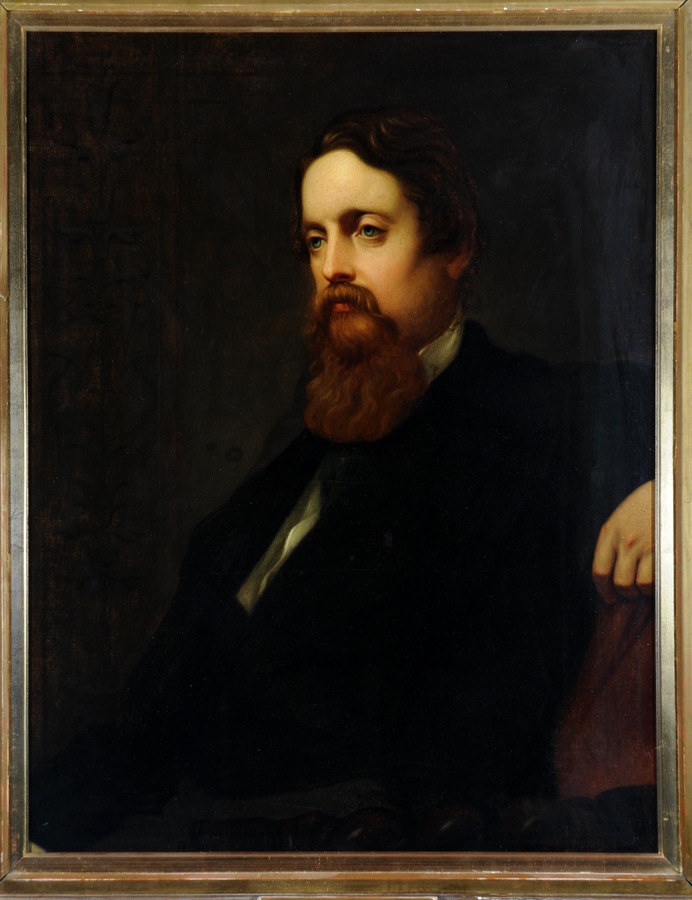
Lord Frederick Cavendish, one of the two victims of the Phoenix Park assassination. National Portrait Gallery, London.
Claim tested
Did the surviving evidence ever establish a connection between Charles Stewart Parnell and the Phoenix Park murders?
Concise verdict
No. The murders were carried out by the Irish National Invincibles, a breakaway group formed specifically because Parnell’s constitutional movement had rejected political violence. The letters The Times published in 1887 implying Parnell excused the killings were forgeries, written by the journalist Richard Pigott, and Pigott’s forgery was established directly by his own admission under cross-examination before the Special Commission convened to examine the claim.
Why this claim matters
The Phoenix Park murders are sometimes remembered as connected to Parnell’s Home Rule movement rather than as an attack that movement’s own strategy of non-violence had provoked its perpetrators to break away from. The distinction matters because it was tested directly and formally: a Special Commission with full investigative powers examined the forged evidence and heard Pigott confess to fabricating it under questioning, a rare case where a specific, named distortion was tested and dismantled by a contemporary official body rather than left to later historians to untangle.
Chronology
6 MAY 1882
Lord Frederick Cavendish, arriving in Dublin that day to take up the post of Chief Secretary for Ireland, walks toward the Chief Secretary’s Lodge in Phoenix Park. Thomas Henry Burke, the Permanent Under-Secretary and the group’s actual target, joins him from a cab on Chesterfield Avenue. Both are attacked by a group of Irish National Invincibles and stabbed to death with surgical knives; Joe Brady is later identified as Burke’s killer, Tim Kelly as Cavendish’s. James Fitzharris drives the getaway cab.
1882–1883
Superintendent John Mallon leads the investigation. James Carey, one of the Invincibles, turns Queen’s evidence in exchange for immunity, and his testimony convicts several of his former associates. Five men, including Brady and Kelly, are executed. Carey is later shot dead aboard a ship off Cape Town by Patrick O’Donnell, in apparent revenge for the betrayal.
MARCH 1887
The Times publishes a series of articles, “Parnellism and Crime,” including a letter purportedly written by Charles Stewart Parnell suggesting his public condemnation of the Phoenix Park murders had been insincere.
1888–1889
A Special Commission is convened to examine the letters and the broader allegations. Under cross-examination by Charles Russell, the journalist Richard Pigott, who had supplied the letters to The Times, admits to forging them, in part exposed by his own inconsistent spelling of the word “hesitancy.” Pigott flees to Madrid and takes his own life before he can be prosecuted. The Commission’s final report clears Parnell of complicity in the murders.
Source hierarchy
The 1883 trial record of the Invincibles, resting substantially on James Carey’s testimony as an accomplice witness, and the 1888–89 Special Commission’s official report, which directly examined and reported on the forged letters, sit as primary evidence. Contemporary press coverage, including The Times’ original 1887 articles, is treated as the contested claim under test, not as evidence for it.
Provenance assessment
Carey’s testimony, given by a self-confessed conspirator in exchange for immunity, carries the standard evidentiary caution attached to accomplice evidence, though it was tested and accepted at trial. The Pigott forgery is unusually well evidenced for a Victorian-era claim of this kind: it rests on Pigott’s own admission under formal cross-examination, not on later historical reconstruction.
Contradiction table
A dossier does not smooth over conflicts in the record. Where sources disagree, the disagreement is stated, not resolved by preference for the more commonly repeated version.
| Point of fact | The Times, 1887 | Special Commission, 1888–89 | Status |
|---|---|---|---|
| Authorship of the incriminating letters | Presented as genuine Parnell correspondence | Confessed forgeries, admitted by Richard Pigott under cross-examination | Contradicted |
| Parnell’s connection to the Invincibles | Implied sympathy or foreknowledge | No connection established; Commission’s report clears Parnell of complicity | Contradicted |
Evidential classification
| Claim | Classification |
|---|---|
| Cavendish and Burke were killed by the Irish National Invincibles on 6 May 1882 | Supported |
| Carey’s testimony secured the convictions | Supported |
| Parnell condoned or had foreknowledge of the murders | Unsupported (rested entirely on letters confessed to be forgeries) |
| Pigott forged the letters published by The Times | Supported (admitted under cross-examination) |
What can safely be said
“Lord Frederick Cavendish and Thomas Henry Burke were killed by the Irish National Invincibles in Phoenix Park on 6 May 1882, a group that had broken from Parnell’s movement over its rejection of violence. Letters published by The Times in 1887 implying Parnell’s complicity were forgeries, confessed to by their author, Richard Pigott, before the Special Commission convened to examine them.” This is directly supportable from the 1883 trial record and the Special Commission’s report.
Unresolved evidence gaps
This audit has relied on published secondary accounts of the trial and Commission proceedings rather than the original court and Commission transcripts, which have not yet been independently examined. The full internal history of how Pigott obtained the paper and forms he used for the forgeries is not addressed here.
Source schedule
| Source | Type |
|---|---|
| 1883 trial of the Invincibles, Dublin (accounts of the proceedings) | Primary — court record |
| Report of the Special Commission, 1888–1889 | Primary — official inquiry findings |
| The Times, “Parnellism and Crime” series, March 1887 | Contemporary press — the claim under test |
Commission work using this method.
Private dossiers apply the same source hierarchy, provenance assessment, contradiction mapping and evidential classification to your subject — scoped to your specific claim, intended use and deadline.