TBA-009 · Public Evidence Audit
Johnnie Armstrong of Gilnockie
Caerlanrig, Scottish Borders · July 1530
A powerful Border reiver was hanged along with dozens of his men on the orders of James V, without trial. Ballad tradition frames it as a betrayal of a promised safe conduct. This audit checks what can actually be confirmed about the meeting at Caerlanrig against what the ballad tradition supplies.
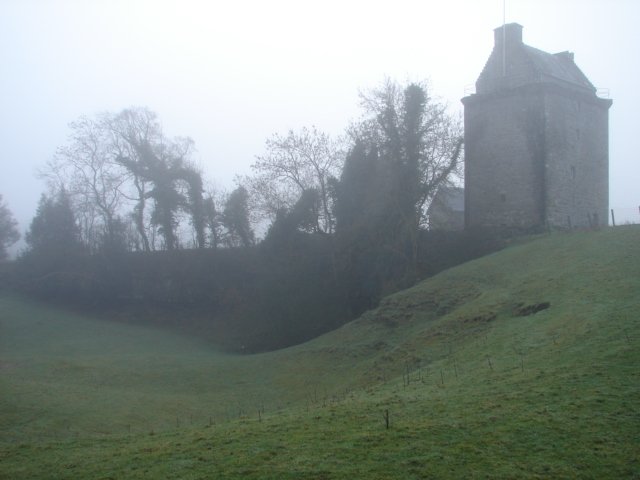
Gilnockie Tower, the Armstrong family stronghold on the Scottish Borders. Photo: Chris Newman, CC BY-SA 2.0.
Claim tested
What does the surviving administrative and archaeological record confirm about the meeting at Caerlanrig, and what does the ballad tradition add?
Concise verdict
The king’s household book confirms his itinerary placed him at Caerlanrig on the relevant date in early July 1530, and a mass grave discovered near the chapel in recent decades has been archaeologically confirmed to hold a large number of bodies, corroborating a mass execution at scale. What the administrative record does not confirm is the specific claim, central to the Child ballad, that James issued a formal written promise of safe conduct and then broke it. That detail rests on the ballad tradition, not on a surviving instrument of pardon or safe conduct.
Why this claim matters
The case is retold almost entirely through Child Ballad 169, which supplies vivid, specific details, a personal letter from the king, an emotional appeal, a betrayal, that make for a compelling narrative but are not independently attested outside the ballad tradition itself. The itinerary record and the archaeology confirm the event’s scale and rough shape. They do not confirm its emotional architecture. That distinction matters for anyone using this case in broadcast or publication, where the betrayed-safe-conduct framing is often presented as settled fact rather than as balladry.
Chronology
2 JULY 1530
James V’s household book records him leaving Linlithgow Palace, travelling via Peebles and Douglas Water, on a border progress intended to suppress reiving activity in the region.
5 JULY 1530
The household book places James at Caerlanrig. Johnnie Armstrong of Gilnockie, a leading Border reiver, meets the king there with a substantial retinue, accounts of its exact size vary between roughly twenty-four and fifty men. Armstrong and his men are hanged without trial. Contemporary and near-contemporary accounts do not agree on the precise sequence of Armstrong’s capture, whether by ambush or by arrival under an understanding of safe conduct.
19TH CENTURY
Child Ballad 169 is collected and published as part of Francis James Child’s compilation of English and Scottish popular ballads, giving the story its familiar shape, a personal letter from the king, a flattered Armstrong riding out in good faith, and a betrayal.
c. 1990s
A mass grave is discovered in a field opposite Caerlanrig chapel, following the uncovering of a marked rectangular stone. Archaeological survey confirms the presence of a large number of bodies at the site, consistent with the scale of a mass execution.
Source hierarchy
The Scottish royal household book and Treasurer’s Accounts for 1529–1530 are treated as primary administrative record, confirming the king’s itinerary and location. The archaeological survey of the Caerlanrig grave is treated as primary physical evidence for scale. Child Ballad 169 and the broader ballad tradition are treated as later literary construction, not as an eyewitness or documentary source for the specific claims of a written safe conduct and its betrayal.
Provenance assessment
The household book confirms presence and timing but not intent or the terms on which Armstrong attended. No surviving instrument of pardon or safe conduct has been located for this audit; its existence is inferred by tradition, not documented directly. The archaeological confirmation of a mass grave is independent of the ballad and corroborates scale without confirming the ballad’s specific narrative claims.
Contradiction table
A dossier does not smooth over conflicts in the record. Where sources disagree, the disagreement is stated, not resolved by preference for the more commonly repeated version.
| Point of fact | Administrative record | Ballad tradition | Status |
|---|---|---|---|
| Formal written safe conduct | No surviving instrument located | A personal letter from the king promising safety is central to the narrative | Unconfirmed |
| Number of men executed | Not precisely established by administrative sources | Varies across accounts, from roughly 24 to 50 | Unresolved |
Evidential classification
| Claim | Classification |
|---|---|
| James V was at Caerlanrig on 5 July 1530 | Supported (household book) |
| Armstrong and a large number of his men were hanged without trial | Supported (archaeological corroboration of scale) |
| The king issued a formal written safe conduct and broke it | Unconfirmed (sourced to ballad tradition; no surviving instrument located) |
| Exact number of men executed | Unresolved |
What can safely be said
“James V’s household book places him at Caerlanrig on 5 July 1530, where Johnnie Armstrong of Gilnockie and a substantial number of his men were hanged without trial. A mass grave discovered near the chapel corroborates an execution at scale. The ballad tradition’s specific claim of a written royal promise of safe conduct, betrayed, is not confirmed by any surviving administrative instrument.” This is directly supportable from the household book and the archaeological findings.
Unresolved evidence gaps
Whether any formal instrument of safe conduct was issued and has simply not survived, or whether the ballad tradition constructed this element from a looser verbal understanding, cannot be resolved from the sources consulted for this audit. The precise number of men executed remains unresolved across the sources checked.
Source schedule
| Source | Type |
|---|---|
| Scottish royal household book / Treasurer’s Accounts, 1529–1530 | Primary — administrative record of the king’s itinerary |
| Archaeological survey of the Caerlanrig grave site | Primary — physical evidence, corroborates scale |
| Child Ballad 169, “Johnnie Armstrong” (Francis James Child, The English and Scottish Popular Ballads, 1882–1898) | Later literary tradition, not documentary evidence |
Commission work using this method.
Private dossiers apply the same source hierarchy, provenance assessment, contradiction mapping and evidential classification to your subject — scoped to your specific claim, intended use and deadline.