TBA-014 · Public Evidence Audit
Hawley Harvey Crippen
Hilldrop Crescent, Camden · 1910
This case is commonly retold as a settled conviction: a calculating poisoner undone by the first use of wireless telegraphy to catch a fugitive. The remains found in his cellar were never independently identified as his wife’s, and the identification the prosecution offered has since been directly challenged. This audit separates what the 1910 trial record establishes from what a century of retelling has assumed was settled.
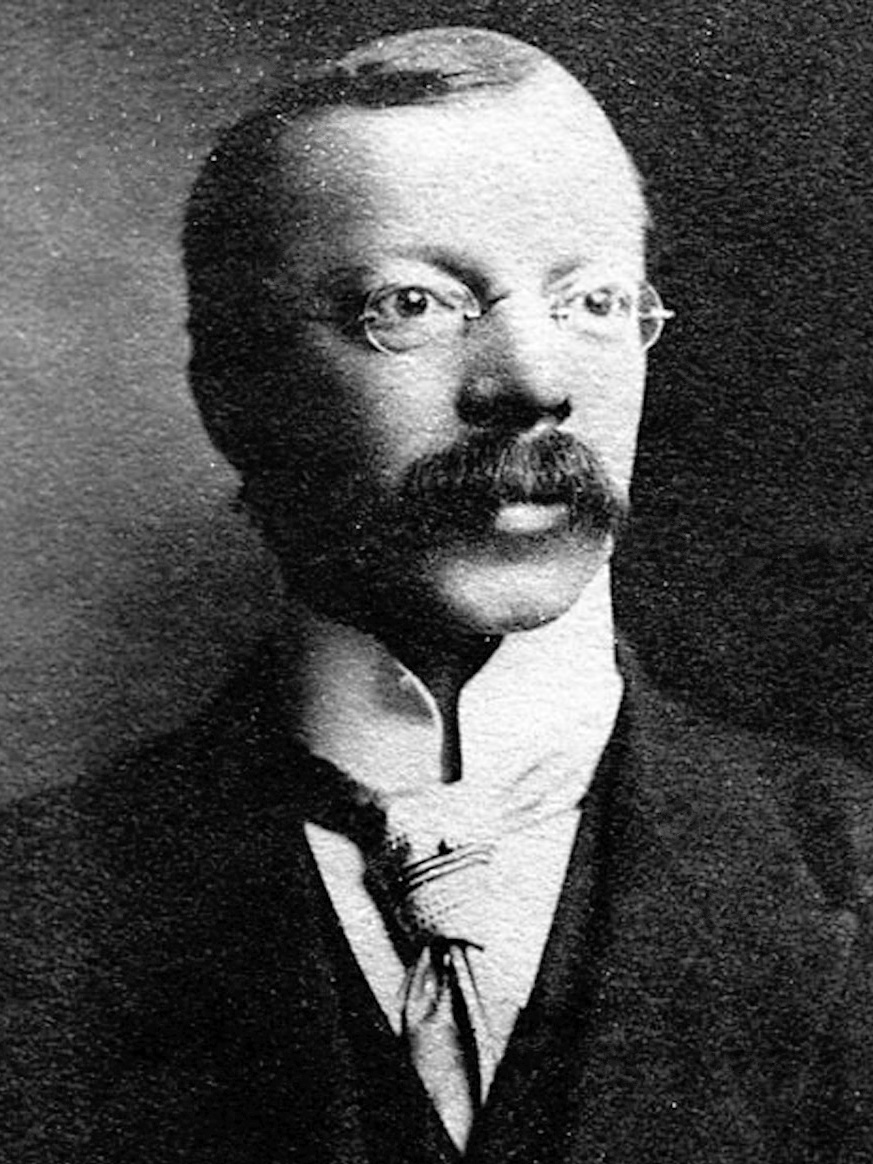
Hawley Harvey Crippen, photograph originally published 1910.
Claim tested
What does the surviving record establish about the identity of the remains found in the Crippen cellar, and about the conviction that rested on them?
Concise verdict
This was a circumstantial murder conviction — a poison purchase, a flight, a dated pyjama fragment, and a disputed pathological scar — that crystallised around one contested identification. It became a legend of forensic certainty and technological pursuit. The trial record supports the first sentence. It does not, on its own, support the second.
Why this claim matters
The Crippen case is frequently used as the origin story of modern forensic celebrity and of technology-assisted manhunts. That framing treats the identification of the remains as settled fact rather than as the single, contested, single-witness judgment the trial record shows it to have been — and it repeats, almost universally, an arrest-scene quotation that does not appear in the trial transcript in the form it is always given. Retelling the case with the identification treated as contested, and the quotation corrected against the record, is both more accurate and the sharper story.
Chronology
31 JANUARY 1910
Cora Crippen, a music hall performer living at 39 Hilldrop Crescent, Camden, is seen alive for the last time, at a dinner with friends. Her husband, Hawley Harvey Crippen — trained as a homeopathic physician, but by this point a partner in a dental practice, the Yale Tooth Specialists, at Albion House — later tells friends she has gone to America, then that she has died there. Ethel Le Neve, Crippen’s secretary and mistress, moves into the house in March and is seen wearing Cora’s jewelry.
JULY 1910
Cora’s friends report her disappearance to Scotland Yard. Chief Inspector Walter Dew’s first search of the house finds nothing; Crippen answers questions calmly and Dew leaves satisfied. Crippen and Le Neve then flee. On Dew’s return, a more thorough search finds human remains, buried in quicklime under the cellar floor, missing the head, limbs, and skeleton.
20–22 JULY 1910
Crippen and Le Neve, having already fled to Antwerp, board the SS Montrose for Canada, traveling second class as “Mr Robinson and son,” Le Neve disguised as a boy. Captain Henry Kendall recognizes them from newspaper descriptions and, before the ship passes out of wireless range, has his telegraph operator alert Scotland Yard — the first documented use of wireless telegraphy to track a fugitive.
31 JULY 1910
Chief Inspector Dew, having crossed on a faster liner, boards the Montrose in the St Lawrence River disguised as a harbor pilot and arrests Crippen. According to the account given at trial, Crippen’s reply on being told he would be arrested was: “I am not sorry; the anxiety has been too much.” On being handcuffed he added, “I am more than satisfied, because the anxiety has been too awful,” and then asked after Le Neve, adding, “It is only fair to say that she knows nothing about it. I never told her anything.” He is returned to England to stand trial.
18–22 OCTOBER 1910
Trial at the Central Criminal Court, Old Bailey, before the Lord Chief Justice, Lord Alverstone. Pathologists Augustus Pepper and Bernard Spilsbury testify that a mark on a section of preserved skin from the remains is consistent with an old surgical scar Cora Crippen was known to have had; the defence argued the mark was a natural skin fold, pointing to hair follicles that scar tissue should not show. Willcox, the Home Office analyst, found a quantity of hyoscine (scopolamine) consistent with a fatal dose, a drug Crippen had purchased shortly before Cora’s disappearance. The jury convicts on 22 October, after roughly half an hour’s deliberation. Ethel Le Neve is tried separately on 25 October and acquitted of complicity.
5 NOVEMBER 1910
Crippen’s appeal to the Court of Criminal Appeal is heard and dismissed, and the verdict and sentence affirmed — confirmed independently by both the trial record’s own chronology and a separate probate court ruling arising from Cora Crippen’s estate.
23 NOVEMBER 1910
Crippen is hanged at Pentonville Prison. He maintains his innocence to the end.
2007–2011
A forensic team led by David Foran at Michigan State University, working with genealogist Beth Wills, obtains one of Spilsbury’s original pathology slides from the Royal London Hospital Archives — one of nine surviving slides from the case, the other eight untested. They extract mitochondrial DNA from the tissue and compare it against DNA from Cora Crippen’s traced maternal relatives. No match is found, differing at a minimum of five nucleotide positions; supplementary sex-typing (autosomal and Y-chromosome-specific markers) returns a result consistent with male tissue, replicated on a second, independent extraction. Findings published as Foran, Wills, Kiley, Jackson, and Trestrail, Journal of Forensic Sciences, 2011.
Source hierarchy
The verbatim 1910 trial transcript (Filson Young’s edited but complete reproduction of the proceedings, checked directly), the 2011 peer-reviewed forensic paper (read in full, not from summary), and a separate 1911 probate court ruling sit as primary and near-primary evidence. Contemporary 1910 press coverage is treated as a contemporary layer. Popular true-crime retellings and a 1938 memoir by the arresting officer, published twenty-eight years after the event, are treated as later construction, not primary evidence.
Provenance assessment
The wireless telegram’s substance is corroborated across the trial record, the forensic paper, and contemporary reporting, though this audit has not yet obtained the appendix reproducing its exact wording verbatim. The Foran team’s methodology is peer-reviewed, published, and directly addresses the contamination question: only one of two extraction methods produced usable DNA, a pattern the paper argues is itself consistent with fixed 1910 tissue rather than modern contamination. A non-match to living relatives is evidence against the identification; it is not, by itself, proof of an alternative identity for the remains.
Contradiction table
A dossier does not smooth over conflicts in the record. Where sources disagree, the disagreement is stated, not resolved by preference for the more commonly repeated version.
| Point of fact | Version A | Version B | Status |
|---|---|---|---|
| Identity of the cellar remains | Spilsbury’s 1910 scar identification, accepted at trial | Foran team’s 2011 mitochondrial DNA finding: no match, male-consistent tissue | Contradicted |
| Crippen’s arrest-scene statement | Popular retelling: “Thank God it’s over. The suspense has been too great. I couldn’t stand it any longer” — presented as a confession | Trial transcript, prosecution’s account: “I am not sorry; the anxiety has been too much” / “more than satisfied… too awful” — with an unprompted statement that Le Neve knew nothing | Contradicted |
| Ethel Le Neve’s role | Some retellings imply knowing complicity | Tried separately on a complicity charge and acquitted; Crippen stated at arrest that she knew nothing | Contradicted |
The popular arrest quotation traces to Walter Dew’s memoir, published in 1938 — twenty-eight years after the event — not to a contemporaneous record. It should not be presented as a confession to murder in any form.
Evidential classification
| Claim | Classification |
|---|---|
| Cora Crippen disappeared in January 1910 and human remains were found in the Hilldrop Crescent cellar | Supported |
| The remains found were Cora Crippen’s | Disputed (directly challenged by 2011 mitochondrial DNA finding) |
| Scopolamine was present in the remains and had been purchased by Crippen | Probable (contingent on correct identification of the remains) |
| Crippen’s arrest-scene statement was a confession to killing his wife | Unsupported (trial record shows relief at arrest, not an admission of killing; the widely repeated “confession” wording does not appear in the transcript) |
| Ethel Le Neve was a knowing accomplice | Unsupported (acquitted at separate trial) |
What can safely be said
“Hawley Harvey Crippen was convicted and hanged in 1910 for the murder of his wife, Cora Crippen, substantially on the strength of a pathologist’s disputed identification of remains found in his cellar. In 2011, a peer-reviewed mitochondrial DNA study directly challenged that identification. The widely repeated account of Crippen confessing on arrest does not match the trial record.” This is directly supportable from the trial transcript and the published forensic literature.
Unresolved evidence gaps
The original coroner’s inquest and Bow Street session papers, the pathologists’ original post-mortem and microscopic reports, and the Metropolitan Police investigative file are held at The National Archives and have not been independently reviewed for this audit; they are not reachable by remote research and would require an in-person visit or a formal document request. Whether the 1910 slide’s chain of custody held across nearly a century, and — if the DNA finding is correct — whose remains were actually found in the cellar, remain unresolved. This audit states those gaps explicitly rather than adopting either version as settled.
Source schedule
| Source | Type |
|---|---|
| Filson Young (ed.), The Trial of Hawley Harvey Crippen (Notable British Trials, 1920) — verbatim trial transcript, checked directly | Primary — edited but complete reproduction of proceedings |
| Foran, Wills, Kiley, Jackson, Trestrail, “The Conviction of Dr. Crippen: New Forensic Findings in a Century-Old Murder,” Journal of Forensic Sciences 56 (2011): 233–240 — read in full | Primary — peer-reviewed forensic paper |
| In re Crippen, Decd. [1911] P. 108 (Probate Division) | Primary — law report |
| 1910 British and North American press coverage of the manhunt, arrest, and trial; Walter Dew, I Caught Crippen (1938) | Contemporary press / later memoir |
Commission work using this method.
Private dossiers apply the same source hierarchy, provenance assessment, contradiction mapping and evidential classification to your subject — scoped to your specific claim, intended use and deadline.