TBA-016 · Public Evidence Audit
Charles I
Whitehall, London · 1649
This case is commonly retold as settled on both ends: a monarch tried and executed for tyranny, and a martyr whose own words survived him in Eikon Basilike. Neither half of that retelling holds up cleanly against the record. The court that tried him drew its authority from an ordinance most of its own named members would not sit under, and the book that shaped his afterlife was very likely not his own work. This audit separates what the surviving trial and execution record establishes from what four centuries of retelling — royalist and otherwise — have assumed was settled.
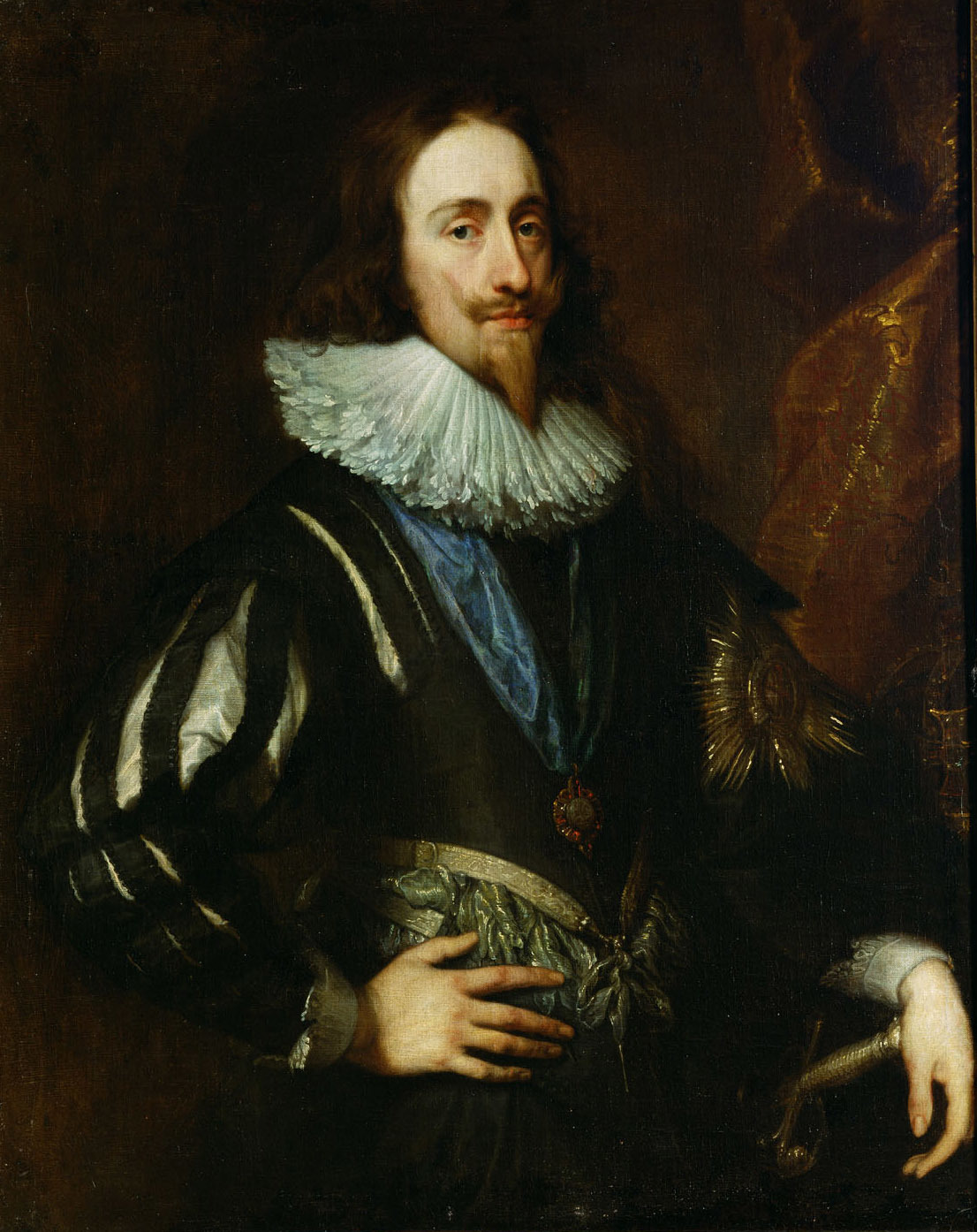
King Charles I, portrait by Anthony van Dyck, c.1632, Kunsthistorisches Museum.
Claim tested
What does the surviving record establish about the 1649 trial and execution of Charles I, and about the martyrdom narrative that followed it within days of his death?
Concise verdict
A sitting monarch was tried by a court created without the consent of the House of Lords or the king, convicted by fewer than half of its 135 named commissioners, and beheaded before a crowd deliberately kept out of earshot by ranks of soldiers. The identity of his executioner was never confirmed at the time and remains genuinely disputed, contested as recently as a treason trial eleven years later. Within ten days of his death, a text of contested authorship — likely written substantially by a clergyman with a documented later incentive to claim it — did more to fix Charles’s reputation as a martyr than the trial record itself ever did.
Why this claim matters
Charles I’s trial and death are usually remembered as a single, clean historical hinge point — tyrant tried, martyr made. The record shows a court that struggled for a quorum, a conviction carried by well under half its own named membership, an executioner whose identity was disguised and never officially settled, and a martyrdom narrative that was substantially shaped by a book of disputed authorship rather than by the trial itself. Stating those specifics precisely, rather than repeating the smoothed-over version of either side’s tradition, is the whole of the distortion analysis here.
Chronology
6 JANUARY 1649
The Rump Parliament passes an ordinance creating a High Court of Justice to try Charles I, without the consent of the House of Lords and without royal assent. 135 commissioners are named, any twenty of whom would form a quorum.
8 JANUARY 1649
Commissioners meet to plan the trial. Well under half of the 135 named attend — a pattern that repeats at later sessions.
10 JANUARY 1649
John Bradshaw is chosen as Lord President of the Court.
20 JANUARY 1649
The trial opens in Westminster Hall. Solicitor-General John Cook leads the prosecution. Charles refuses to enter a plea and denies the court’s jurisdiction, maintaining no earthly power can try a king.
22–23 JANUARY 1649
Charles is brought before the court on further occasions and again refuses to plead.
24–26 JANUARY 1649
With Charles removed from the court, more than thirty witnesses are heard against him in his absence.
27 JANUARY 1649
At a public session, the court declares Charles guilty of tyranny, treason, and being “a public enemy,” and sentences him to death by beheading. Contemporary counts place those present who rose in agreement at 67 or 68.
29 JANUARY 1649
The death warrant is signed, ultimately by 59 of the 135 named commissioners.
30 JANUARY 1649
Charles is executed on a scaffold erected in front of the Banqueting House, Whitehall, at approximately two in the afternoon. His chaplain William Juxon stands with him on the scaffold and later records his final words. The executioner and an assistant wear false wigs, beards, and masks; their identities are concealed and never officially confirmed.
c. 9 FEBRUARY 1649
Eikon Basilike, presented as the king’s own spiritual memoir, is in wide circulation — some sources place copies in print on or before the day of the execution itself. By the end of the year, roughly thirty-five editions have appeared.
20 JUNE 1649
Richard Brandon, London’s common hangman, dies. A pamphlet, The Confession of Richard Brandon, is published shortly afterward, claiming he privately admitted to executing the king.
1660 (RESTORATION)
William Hulet stands trial for treason, accused of being the king’s executioner, on testimony that a witness recognised his voice on the scaffold. He is convicted; the sentence is not carried out. Around the same period, John Gauden petitions Charles II for a wealthier bishopric, citing his authorship of Eikon Basilike as grounds for preferment.
Source hierarchy
No single official transcript of the trial survives; the fullest near-contemporary accounts are published pamphlets from 1649, not a court-certified record, and they vary in detail. Charles’s scaffold speech and final words were recorded by one man on the scaffold with him — his own chaplain, William Juxon — and every later retelling of those words traces back to that single source, not to an independent record.
Provenance assessment
The often-repeated detail of the crowd’s collective groan at the moment of execution rests on the account of Philip Henry, who was seventeen years old and present that day, but who wrote the account down from memory years afterward; no other surviving contemporary source corroborates it, and none directly contradicts it either. The identification of Richard Brandon as executioner rests on a pamphlet published after his death, of a type known to have been produced quickly and cheaply for a paying public, not on any sworn or official statement made in his lifetime. John Gauden’s claim to have written Eikon Basilike was not made publicly in 1649; it surfaces only after the Restoration, at a point when Gauden had a documented personal interest — a more lucrative bishopric — in being recognised as its author. That timing does not disprove his claim, which modern bibliographic scholarship treats as the best-supported attribution available, but it does mean the claim was not independent of the claimant’s own advantage.
Contradiction table
A dossier does not smooth over conflicts in the record. Where sources disagree, the disagreement is stated, not resolved by preference for the more commonly repeated version.
| Point of fact | Version A | Version B | Status |
|---|---|---|---|
| Number of commissioners present at sentencing | Contemporary and modern accounts most often cite 67 | Other equally reputable sources cite 68, or simply “fewer than 70” | Unresolved |
| The executioner’s identity | Popular and near-contemporary tradition names Richard Brandon, resting on a pamphlet published weeks after his death | A 1660 treason trial convicted William Hulet of the same act on separate witness testimony; historians remain divided | Contradicted |
| When Eikon Basilike first reached wide circulation | Some sources state copies were available on or just before the day of execution, 30 January | Other sources date its first wide publication to around 9 February, ten days later | Unresolved |
| Authorship of Eikon Basilike | Accepted at face value as Charles’s own writing for over a decade, shaping his martyrdom narrative unchallenged | Modern bibliographic scholarship (Madan’s New Bibliography of the Eikon Basilike) attributes primary authorship to John Gauden, though it may draw on genuine material Charles supplied | Contradicted |
Evidential classification
| Claim | Classification |
|---|---|
| Charles I was tried by a High Court of Justice created without House of Lords consent or royal assent | Supported |
| Charles refused to plead and denied the court’s jurisdiction throughout | Supported |
| A majority of the 135 named commissioners took part in convicting him | Contradicted (fewer than half attended the planning session; roughly 67–68 attended sentencing; 59 signed the warrant) |
| Charles was executed on 30 January 1649 outside the Banqueting House, Whitehall | Supported |
| Richard Brandon was definitively the king’s executioner | Unsupported (identity never officially confirmed; a separate man was convicted of the same act in 1660) |
| The crowd greeted the execution with an audible, collective groan | Possible (rests on one eyewitness’s account, recorded years after the event; uncorroborated, not contradicted) |
| Eikon Basilike was written personally by Charles I as a genuine spiritual memoir | Disputed (majority modern attribution to John Gauden, though it may incorporate genuine material from the king) |
| The martyrdom narrative associated with Charles I derives substantially from Eikon Basilike rather than from the trial record itself | Probable |
What can safely be said
“Charles I was tried by a High Court of Justice created without the consent of the House of Lords or the king, convicted by fewer than half of its 135 named commissioners, and executed outside the Banqueting House, Whitehall, on 30 January 1649. His executioner’s identity was never officially confirmed and remains disputed. Within ten days, Eikon Basilike, a text of contested authorship now widely attributed substantially to the clergyman John Gauden, did more to establish Charles’s reputation as a martyr than the trial record itself.” This is directly supportable from the trial and execution record and the bibliographic scholarship on Eikon Basilike.
Unresolved evidence gaps
This audit relies on secondary summaries of the 1649 trial pamphlets and the 1660 Hulet trial record rather than direct examination of the original manuscripts and court papers; a fully resourced investigation would verify these against the originals held at The National Archives. The precise attendance figures at sentencing (67 vs. 68) could not be resolved from the sources consulted and are presented here as a live discrepancy rather than settled.
Source schedule
| Source | Type |
|---|---|
| History of Parliament Trust, “The Trial of Charles I”; British Civil Wars Project, “High Court of Justice”; contemporary 1649 trial pamphlets | Primary / near-contemporary narrative — no official transcript survives |
| History of Parliament Trust; European Royal History, “High Court of Justice for the trial of Charles I”; cross-referenced against general reference works for consensus figures | Secondary — commissioners, attendance, death warrant |
| William Juxon’s contemporary record of Charles’s scaffold speech; Philip Henry’s recollection of the crowd’s reaction, recorded from memory after the event | Primary (single-witness) / later recollection |
| The Confession of Richard Brandon (pamphlet, 1649); Dictionary of National Biography (1885–1900), “Brandon, Richard”; accounts of the 1660 trial of William Hulet | Contemporary pamphlet / secondary summary |
| F.F. Madan, A New Bibliography of the Eikon Basilike of King Charles the First (Oxford Bibliographical Society, New Series, Vol. III, 1949–50); Cambridge University Library Special Collections notes on its Eikon Basilike collection (CCA-E.8) | Secondary — standard bibliographic study |
Commission work using this method.
Private dossiers apply the same source hierarchy, provenance assessment, contradiction mapping and evidential classification to your subject — scoped to your specific claim, intended use and deadline.